Science
Science behind
Science in the service of transformation.
For us, science is not an end in itself, but a tool. It helps us understand the complexity of human development well enough to make growth possible.
Every model and method must be measured against one question: Does it help people grow in a healthy and authentic way?
Human development is neither linear nor isolated. Thoughts, feelings, motives, the body, relationships and the environment constantly interact. That is why we combine developmental psychology, neuroscience, motivational and personality psychology, and systems thinking—recognizing complexity while making it manageable.
For us, research and practice form a cycle. Science helps us ask better questions. Practice helps us find better answers and tests what theory promises. We bring this work together at the Liesenfeld Research Institute.
Science inspires our practice –
our practice inspires science
Scientific foundation
The theoretical foundation
The COLOUREM® method
The COLOUREM® method
Scientific depth in effective practice
Dr. Kerstin Liesenfeld developed COLOUREM® in 2006 as a functionally structured, systemic coaching method. It translates these theories and insights into the functional organization of the brain into work with the interplay of four central functional systems.
Clients develop self-awareness, learn to regulate their inner states flexibly and independently, translate higher-level intentions into achievable steps, and use setbacks as catalysts for growth.
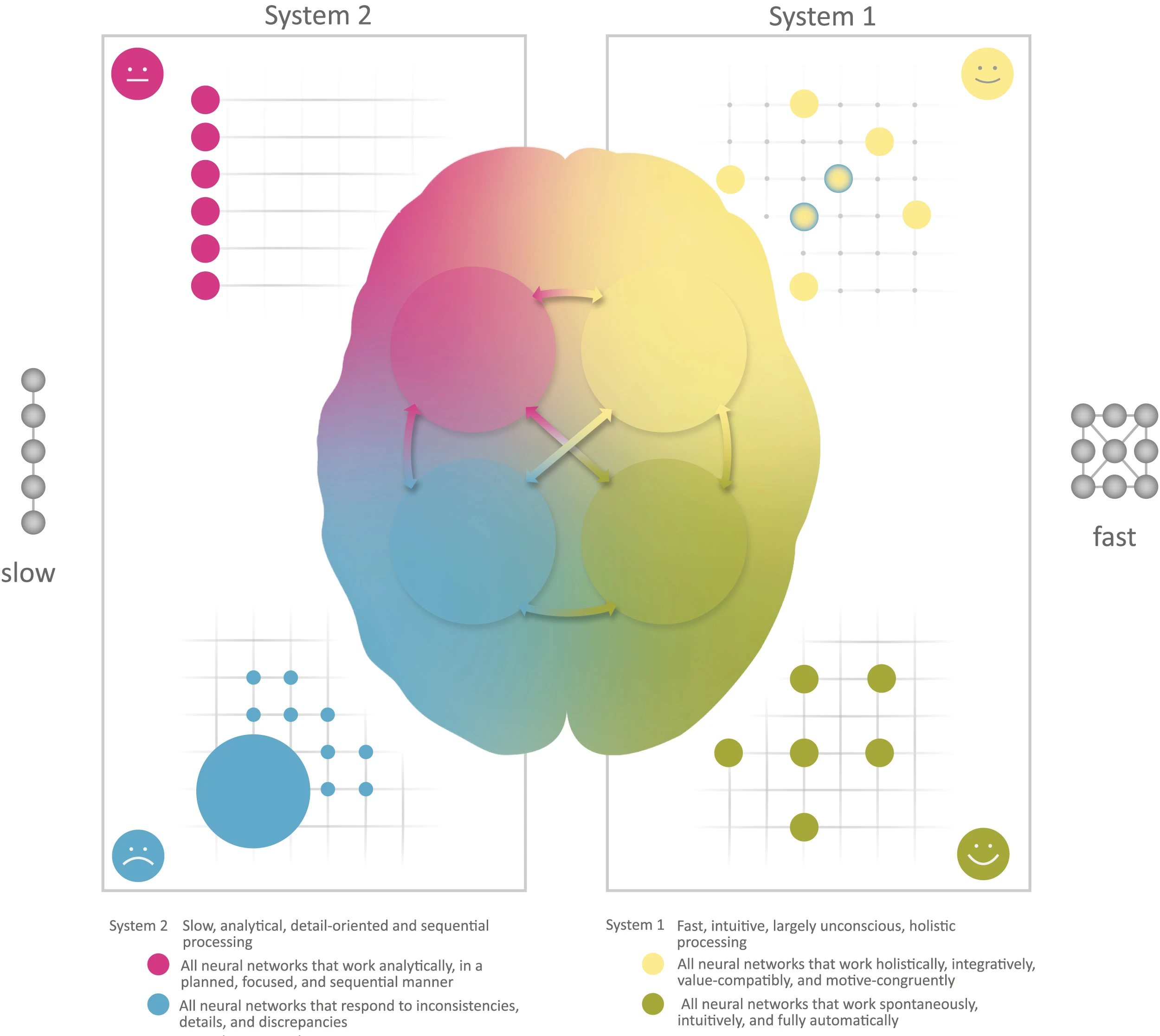
For coaches, consultants and educators we offer annual COLOUREM® supervision circles.
Scientific background
The Inner Transformation Profile (ITP)
The neurofunctional synthesis.
The ITP combines the developmental logic of Dynamic Skill Theory with the self-regulation logic of PSI Theory. It shows not only how well developed a competency is, but also how readily it can be accessed in the demanding day-to-day reality of leadership, especially under pressure.
We provide fellow professionals with scientific documentation of the ITP upon request.