
PSI-Theory
PSI-Theory
Kuhl's PSI Theory (University of Osnabrück) describes four central brain systems in its model of action control, which are essential for regulating actions and thus achieving individual goals.
Our brain is highly complex and equipped with a wide variety of individual functions, most of which are distributed across many different brain regions. Nevertheless, there are networks that each perform specific functions. To make this complexity a little easier to understand, we have simplified the processes somewhat and focus here on the interaction of four central functional areas in your brain that illustrate the processes of information processing and learning. Lasting learning and the actions that result from it are only possible when the two hemispheres of your brain work together seamlessly, supporting the four major areas described below: intuitive behavior control, object recognition, holistic processing, and strategic networks.
Your left brain hemisphere processes information primarily step by step, one item at a time. It mainly processes numbers, symbols, letters, and facts. By contrast, the right hemisphere can process many different pieces of information simultaneously and therefore very quickly. It specializes in processing extensive and complex information at the same time, such as images, music, or experiences from the environment.
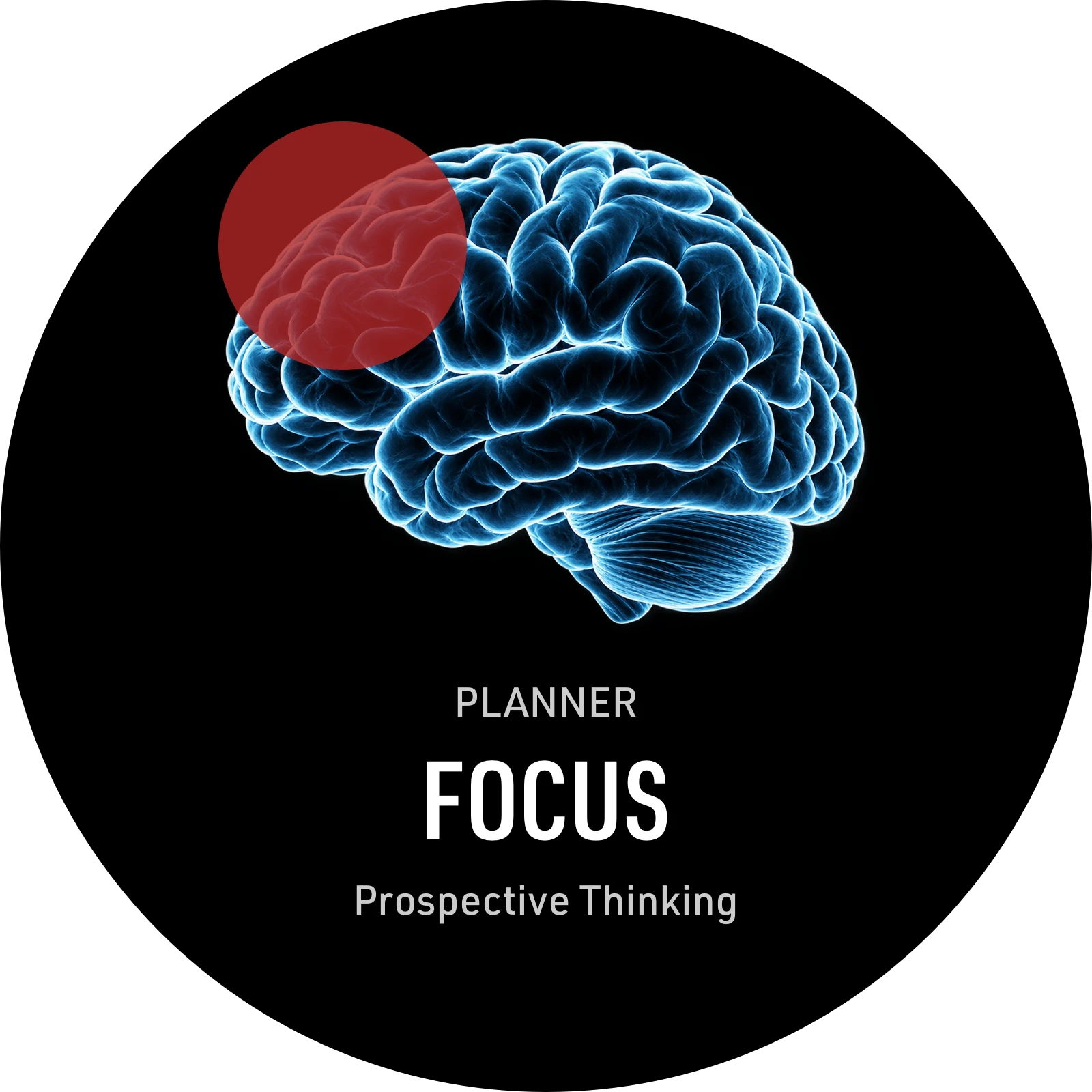
The red system: The inner planner (intention memory)
This system includes all functional areas that process information sequentially, that is, step by step.
This part of your brain is responsible for conscious thinking and planning. Here, you can develop precise work plans and action steps before putting them into practice. This system takes a lot of effort and is heavily involved whenever you acquire “new knowledge.” Your mood in this brain area is characterized by objective sobriety.
Whether “new knowledge” can be retained in the long term depends on how well the connection between the red system, the inner planner, and the yellow system, the inner executive, works.
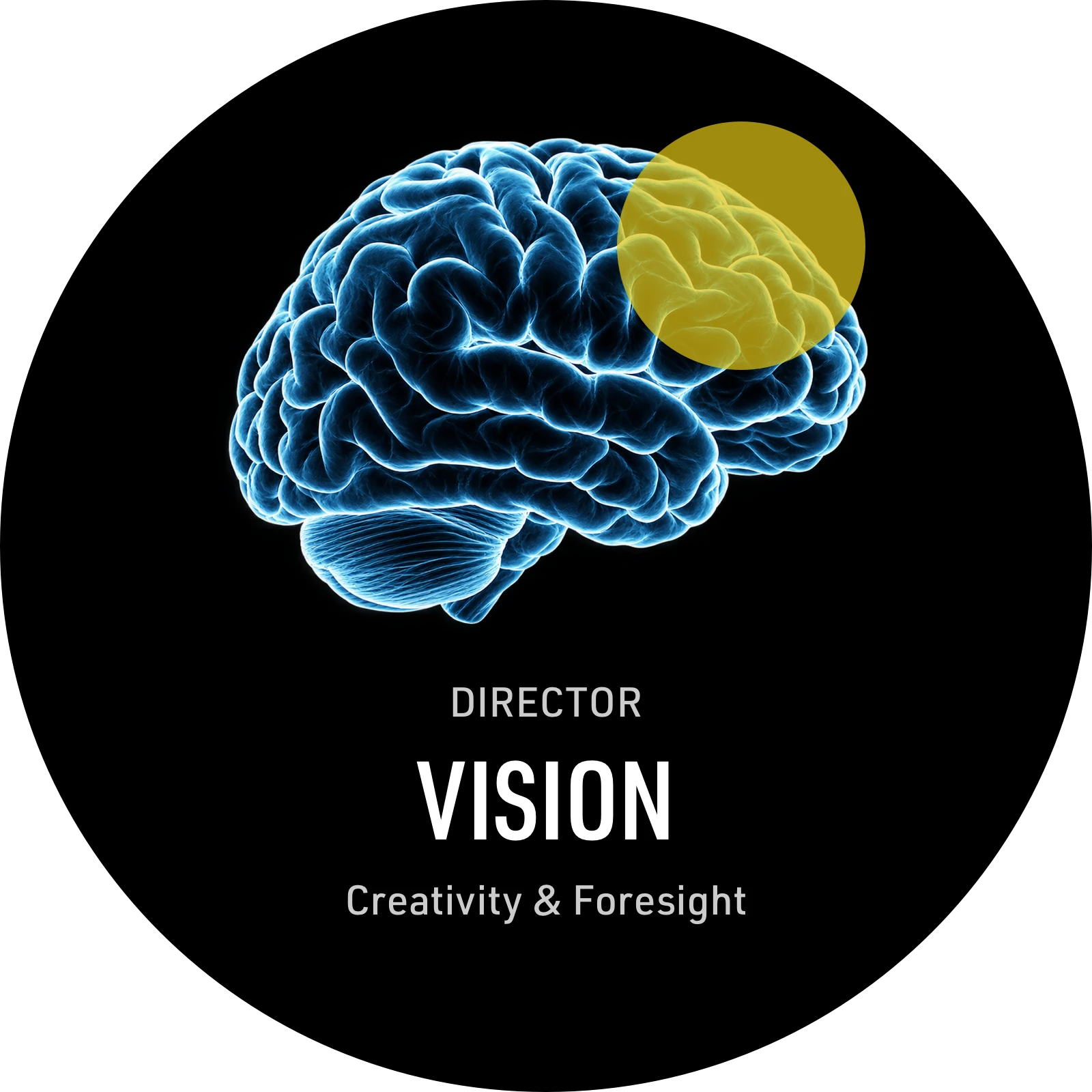
The yellow system: The inner executive (extension memory)
This system includes all the neural networks in our brain that can process information in parallel—that is, those designed to receive and process multiple pieces of information simultaneously. This system gives you an overview, and your mood is characterized by composure.
This system can be thought of as a kind of control center for your life experiences to date. It stores knowledge about your own wishes and needs, as well as about your social environment. This system enables you to answer the question of the “meaning” of what you are learning. If you are unable to activate this yellow system, the inner executive, you will not experience learning as meaningful—and your learning success will not last.
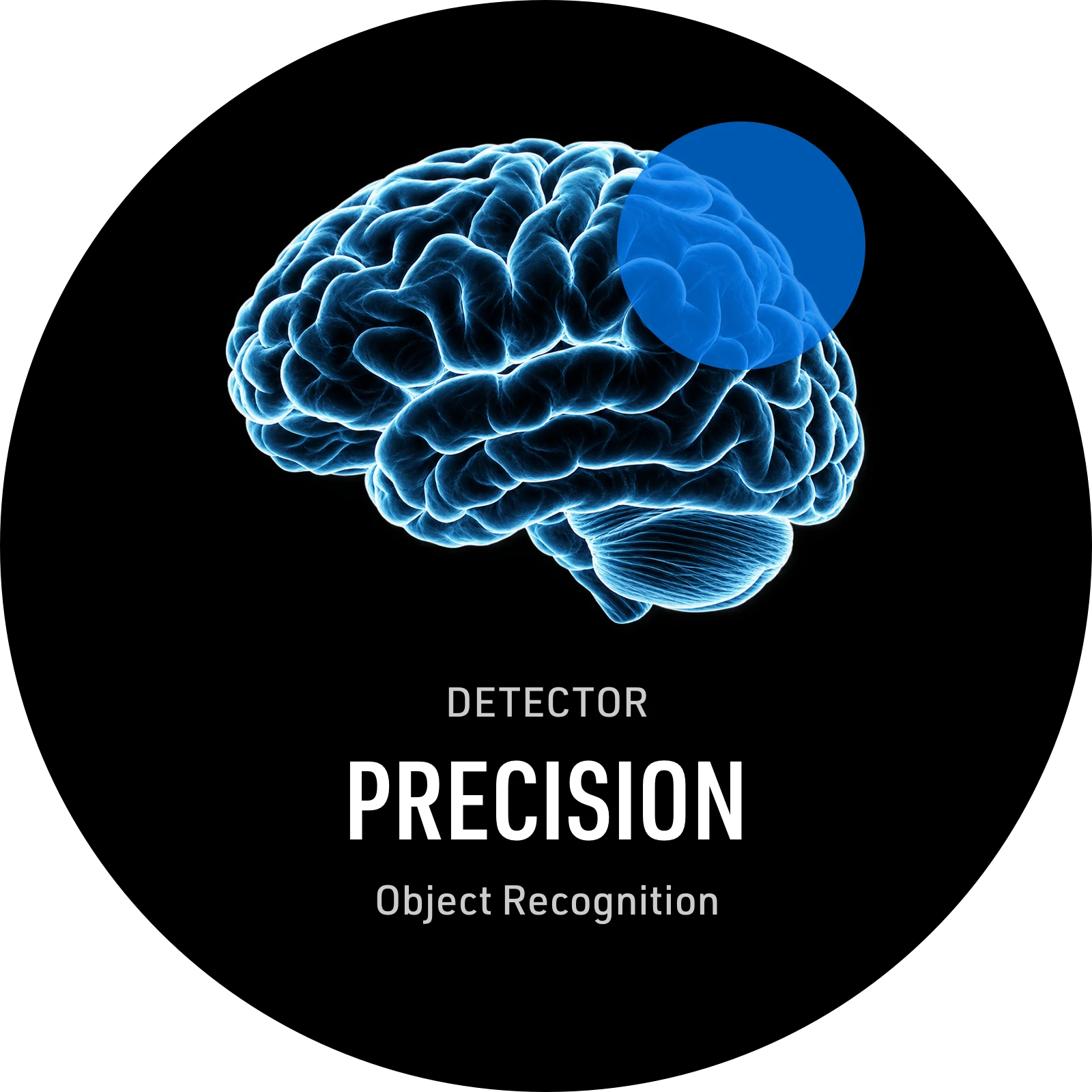
The blue system: The inner controller (object recognition system)
This system comprises networks that are sensitive to discrepancies, focusing on detecting inconsistencies. It can therefore be understood as the inconsistency detector in our brain. Your mood in relation to this brain area is unsettled.
Here, you monitor your actions and plans, and this is where you analyze errors. The blue system alerts you to any deviation from the “norm” you have established based on your previous experience. If it is not sufficiently integrated, the inner controller can prevent you from putting your new knowledge into practice.
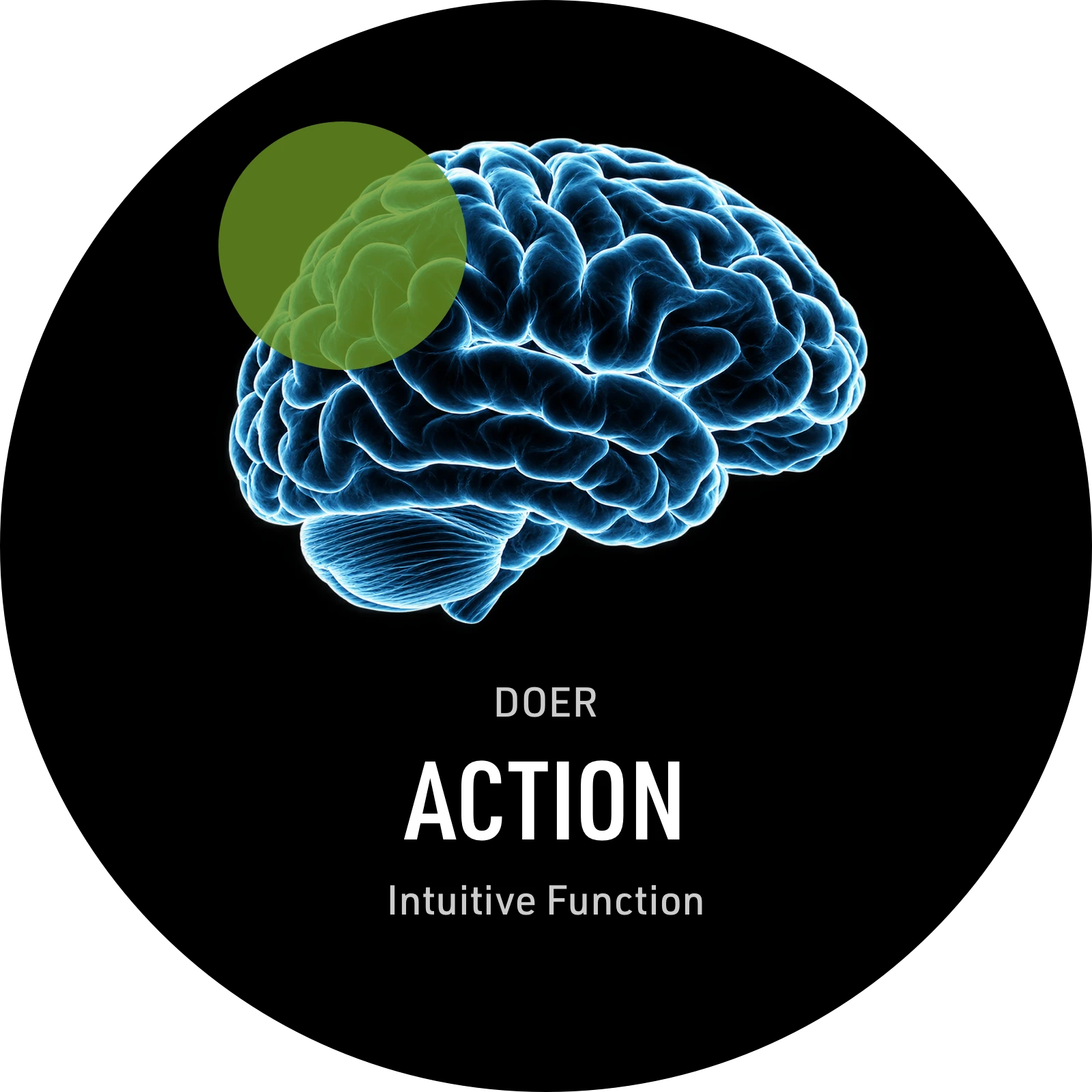
The green system: The inner doer (intuitive behavior control system)
This system includes all the networks that operate intuitively and fully automatically.
This part of your brain is responsible for intuitive behavior control. This system becomes active as soon as you are able to apply newly acquired knowledge. Your mood in this area is positive and joyful.
The more you use this system, the stronger the neural connections become, making what you have learned more stable. You also develop the ability to turn new learning into a routine, allowing you to access this knowledge without much effort. This makes it easy to take action.


